
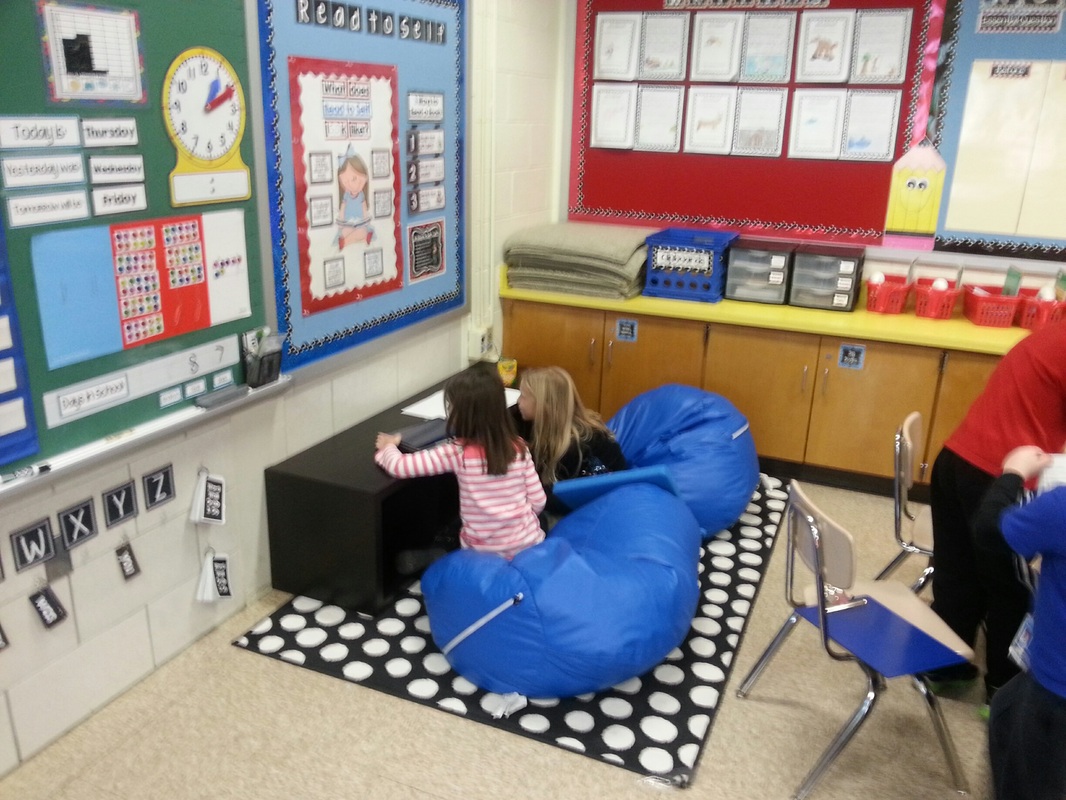
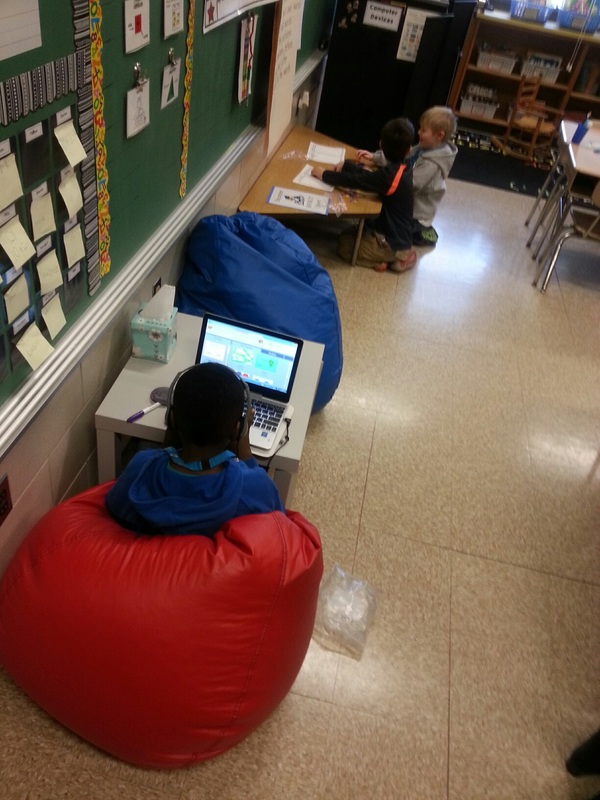
After leaving each classroom, STAT teachers excitedly discuss how each activity promotes cognitive engagement, encourages the exploration of content, and allows for student choice. It is encouraging to see in how many forms learning occur: books, paper and pencil activities, BCPS lesson tiles, manipulatives, digital resources, questioning, discussion and direct instruction. Sometimes the entire class learns together, then breaks into small groups. Other times, students choose to work independently or with a partner. No matter the format, the teacher is integral in scaffolding the learning plan for children so they may access and meet the lesson’s rigorous learning targets.
Each classroom learning space tells a unique story of the learning the students are engaged in. The space is purposefully designed to encourage access to instructional materials and allow personalized learning for all students. In numerous classrooms, visitors would hear, “Find a place to work that is best for you,” or see students rise from their seats without prompting to retrieve materials to augment their learning experience. Teacher and student-created word walls and anchor charts that reflect the current unit of study, pepper the walls and provide a resource that students can always turn to to clarify and build upon their understanding on enduring concepts. Displayed student work resonates of authentic and relevant topics with a choice of products that allows for creative expression. Innovative stations and furniture arrangements encourage collaboration and comfort. Students sit on pillows at low tables, stretch out on colorful rugs, and research on their devices in cozy bean bag chairs.
All of the STAT teacher visitors busily snap photos, ask questions, and take copious notes to capture the environment that is clearly a student learning space rather that a teaching space.
STAT teachers on the learning walks are inspired by the transformation of space, but truly motivated by the apparent shift in student thinking. The learner-centered environments create self-directed learners that routinely use collaboration and communication to facilitate their learning. One enthusiastic group of STAT teachers coin these students as “collaboratively independent.” Students habitually choose activities that best meet their needs, but do not hesitate to help their fellow classmates. They even earnestly call over visitors to explain what they are learning and why. Youngsters are thinking critically and analyzing deeply. Rigor is not lost with the high level of engagement occurring in these purposeful instructional settings.
Each classroom learning space tells a unique story of the learning the students are engaged in. The space is purposefully designed to encourage access to instructional materials and allow personalized learning for all students. In numerous classrooms, visitors would hear, “Find a place to work that is best for you,” or see students rise from their seats without prompting to retrieve materials to augment their learning experience. Teacher and student-created word walls and anchor charts that reflect the current unit of study, pepper the walls and provide a resource that students can always turn to to clarify and build upon their understanding on enduring concepts. Displayed student work resonates of authentic and relevant topics with a choice of products that allows for creative expression. Innovative stations and furniture arrangements encourage collaboration and comfort. Students sit on pillows at low tables, stretch out on colorful rugs, and research on their devices in cozy bean bag chairs.
All of the STAT teacher visitors busily snap photos, ask questions, and take copious notes to capture the environment that is clearly a student learning space rather that a teaching space.
STAT teachers on the learning walks are inspired by the transformation of space, but truly motivated by the apparent shift in student thinking. The learner-centered environments create self-directed learners that routinely use collaboration and communication to facilitate their learning. One enthusiastic group of STAT teachers coin these students as “collaboratively independent.” Students habitually choose activities that best meet their needs, but do not hesitate to help their fellow classmates. They even earnestly call over visitors to explain what they are learning and why. Youngsters are thinking critically and analyzing deeply. Rigor is not lost with the high level of engagement occurring in these purposeful instructional settings.
Submitted by Christine Roberts - S.T.A.T. Teacher, Dumbarton Middle &
Maggie Toolin - S.T.A.T. Teacher, Perry Hall High
The Lighthouse schools have opened their doors and the STAT teachers couldn't be more excited to conduct collaborative learning walks! STAT teachers from elementary, middle, and high schools are making the rounds to experience firsthand the innovations that define these schools so they can begin to imagine the pedagogical and digital transformation in their own schools.
When entering a classroom, it is often tough to spot the teacher! Teachers are redefining traditional roles and adopting a "teacher as facilitator" approach. By acting as a facilitator, educators are found at kidney bean shaped tables reinforcing core content with a small group of students or even sitting on a rug among their students as one pupil presents to their peers, while other small groups of students explore content using manipulatives or digital tools. It is evident that this type of teaching takes a deep commitment to advanced planning and collaboration with colleagues. In teams, educators craft meaningful lessons that encourage students to explore and construct their own knowledge through a variety of purposeful learning experiences that vary in structure and product. What does not vary is the learning outcomes and high expectations for all children.
Throughout a lesson, students are grouped in a myriad of ways rooted in formative assessment data and learning preferences. This approach allows for flexible grouping where students are not confined to one grouping structure, but instead shift seamlessly between constantly evolving combinations of students to ensure personalized instruction. Between activities, one teacher quickly accesses BCPS One to review her students’ level of mastery on a particular assignment from the lesson tiles feature and adjusts her groups as necessary for the subsequent activity. Every student is deliberately placed based on their personal learning needs within seconds!
Maggie Toolin - S.T.A.T. Teacher, Perry Hall High
The Lighthouse schools have opened their doors and the STAT teachers couldn't be more excited to conduct collaborative learning walks! STAT teachers from elementary, middle, and high schools are making the rounds to experience firsthand the innovations that define these schools so they can begin to imagine the pedagogical and digital transformation in their own schools.
When entering a classroom, it is often tough to spot the teacher! Teachers are redefining traditional roles and adopting a "teacher as facilitator" approach. By acting as a facilitator, educators are found at kidney bean shaped tables reinforcing core content with a small group of students or even sitting on a rug among their students as one pupil presents to their peers, while other small groups of students explore content using manipulatives or digital tools. It is evident that this type of teaching takes a deep commitment to advanced planning and collaboration with colleagues. In teams, educators craft meaningful lessons that encourage students to explore and construct their own knowledge through a variety of purposeful learning experiences that vary in structure and product. What does not vary is the learning outcomes and high expectations for all children.
Throughout a lesson, students are grouped in a myriad of ways rooted in formative assessment data and learning preferences. This approach allows for flexible grouping where students are not confined to one grouping structure, but instead shift seamlessly between constantly evolving combinations of students to ensure personalized instruction. Between activities, one teacher quickly accesses BCPS One to review her students’ level of mastery on a particular assignment from the lesson tiles feature and adjusts her groups as necessary for the subsequent activity. Every student is deliberately placed based on their personal learning needs within seconds!
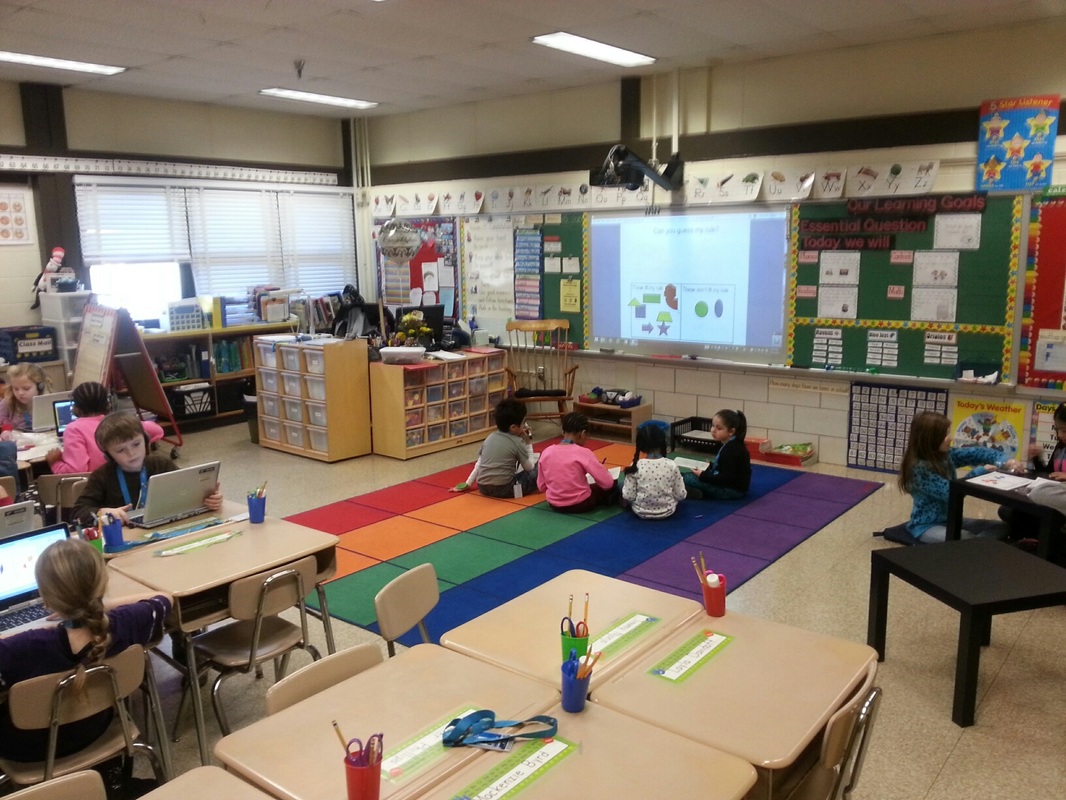
As the learning walks wrapped up and the STAT teachers reconvene to debrief and discuss the experience with the Lighthouse school leadership, one take-away was evident: The school environment and culture is purposefully cultivated and does not happen overnight. Leadership touts the importance of ongoing job-embedded professional learning opportunities coupled with an open doors, open minds attitude. When teachers are asked how they do it, they eagerly emphasized the value of procedures, routines, high expectations and a growth mindset.
Phones packed with pictures, pages of notes and ideas, and huge grins, STAT teachers leave the Lighthouse schools with a sense of urgency to spread the word in their home schools and continue their work in the transformation teaching and learning.
Phones packed with pictures, pages of notes and ideas, and huge grins, STAT teachers leave the Lighthouse schools with a sense of urgency to spread the word in their home schools and continue their work in the transformation teaching and learning.
 RSS Feed
