BCPS Lighthouse Schools
  • Home
  • Schools
  • Reflections
  • Journeys
  • Learning
    • Learner-Centered Environments
    • Nights of Innovation
    • Summer Institutes
  • Press
  • #BCPSLH

Using Targeted Small Group Instruction to Close Gaps

4/20/2016

0 Comments

 
Submitted by Niamh McQuillan 
S.T.A.T. Teacher, 
Windsor Mill Middle
Picture
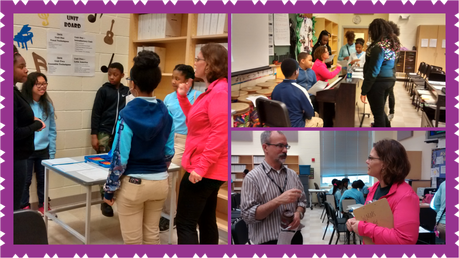
​Vocal Music Teacher, MaryBeth Benesch was intrigued when she first heard of teachers using small-group instruction in their classrooms. She knew the strategy targeted students who had misconceptions or gaps in their learning. The conundrum was: how could she bring this into her vocal music classes? Deer Park Elementary Music Teacher, Kirsten Chalk, an enthusiastic adopter of the learning method, happily invited Benesch into her 5th grade classroom to observe the practice in action. Benesch spent a class period studying Chalk’s procedures and asking student’s questions about the process. The very next day, on her drive into work, Benesch had a Eureka! moment and saw a way to incorporate small-group instruction into her class that very day. A handful of students had joined her class a few weeks into the new semester and needed to learn the basics of sight-reading. Benesch pulled the students at the beginning of class to directly target the gaps in their learning, while the remainder of the class worked in collaborative groups. World Language teacher, Mr. Gaul, joined the impromptu lesson and began to plan his own version of small-group instruction into his Spanish I and II classes.  
0 Comments

BCPS Music & Technology Matters

1/5/2015

 
Submitted by Terri Iacarino
Vocal Music Teacher, Joppa View Elementary 

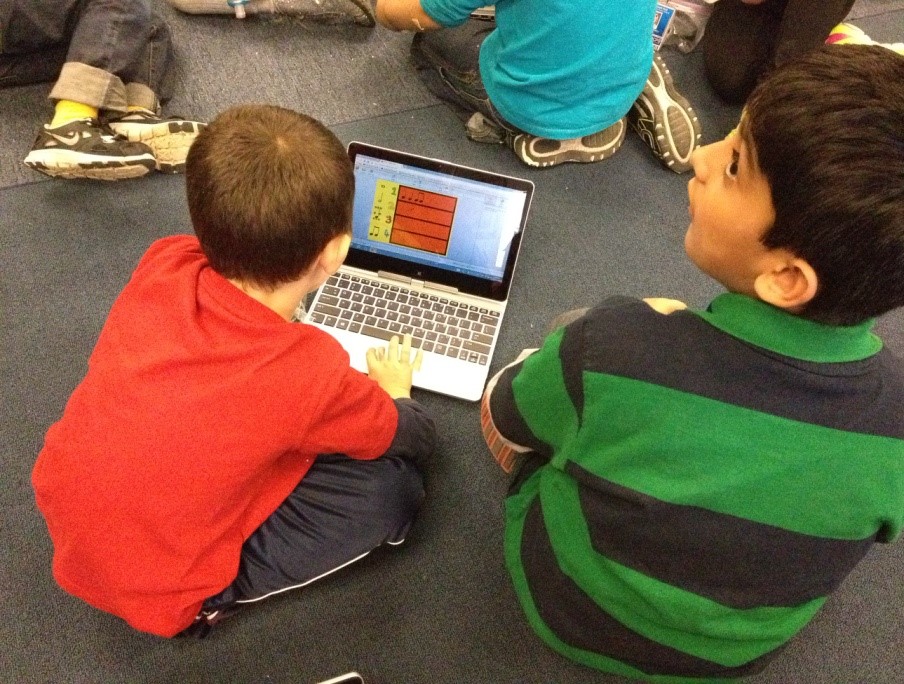
This being my first year at Joppa View Elementary for my tenth year of teaching, I approached the year with thoughts of just using my “tried and true” tricks of the trade with a new group of kids.  Knowing that Joppa View was a Lighthouse School for the 2014-2015 school year, I was excited to learn about the new technology access for students in Baltimore County Public Schools.  Little did I know how many connections I could make to my own musical world that would keep the students engaged in learning during my class and want to try even more on their own time!

My initial reaction to having students using devices in music class was that there’s no time or need to bring devices into the music room because students are already engaged in singing, reading, and creating music while playing instruments, and dancing.  I was also hesitant to have students bring devices to my room in fear of breaking the equipment in the process.

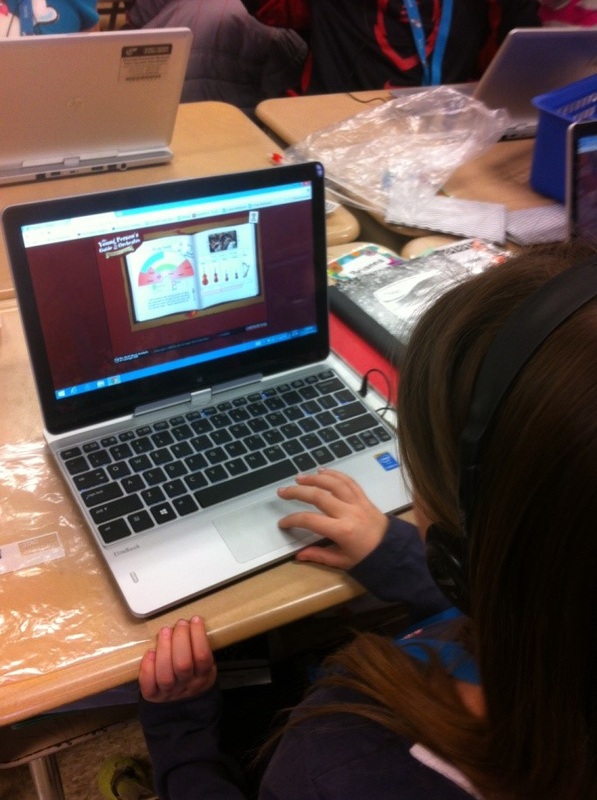
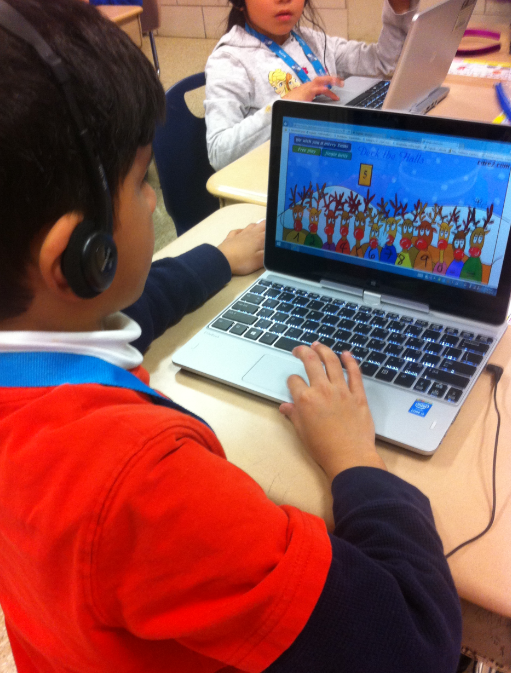
Regardless of my trepidation, I was determined to attempt my first lesson using devices by the end of October! It was amazing to see how much work the teachers had done with the students.  First grade students could log on, open applications, and use tools on their devices without much instruction from me as the teacher.  Students were able to record themselves singing a seasonal song and post it on the website Padlet to share with the teacher/class.  I was able to assess independent singing while students were all working at the same time.  What a time saver!  First grade students used their devices again in December to explore websites that create melodies and label instruments.  As the year progresses, problems that occur with one student or one device can usually be solved by another classmate.  It is quite remarkable that the kids are able to troubleshoot minor problems such as internet connections, login issues, etc.

Second grade students used their devices to complete a Wixie assignment.  It took a little time for me to create the assignment, but the students were easily able to access the program in order to label and manipulate rhythms to create 4-beat patterns.  The students then had to audio record themselves performing a composition of their own.  Seeing the smiles on their faces to hear themselves perform was priceless! Click here for a student example: https://www.wixie.com/p/UzEyNDE3ODc%3D/wixie.html.  Devices were used again for independent learning while playing an interactive website called “Carnegie Hall Listening Adventure.” 
In my attempts of “going green” I attempted a quiz with a second grade class to get their opinion on the day’s lesson and to find out what they learned.  I was able to create a Google Form and assign the survey as an activity on their BCPS One tile for Vocal Music class.  Students completed the form and entered their names to record their performance.  This was the easiest “Exit Ticket” I’ve ever created and assigned!  Since the devices were already out, clicking on the link was a piece of cake for the students.

While music is a performing arts class and students are still expected to perform in various musical ways, it is nice to have a new tool to bring into the music room and show the students how music technology is also a growing field! I look forward to creating music composition activities and utilizing recording options to share classroom performances.  Though it may take extra time and some trial-and-error, my “tried and true” music activities can easily be turned into technology integrated lessons!

High Student Engagement in Exploratory Music

9/19/2014

5 Comments

 
Submitted by Jackie Bryant
Instrumental Music, Church Lane Elementary

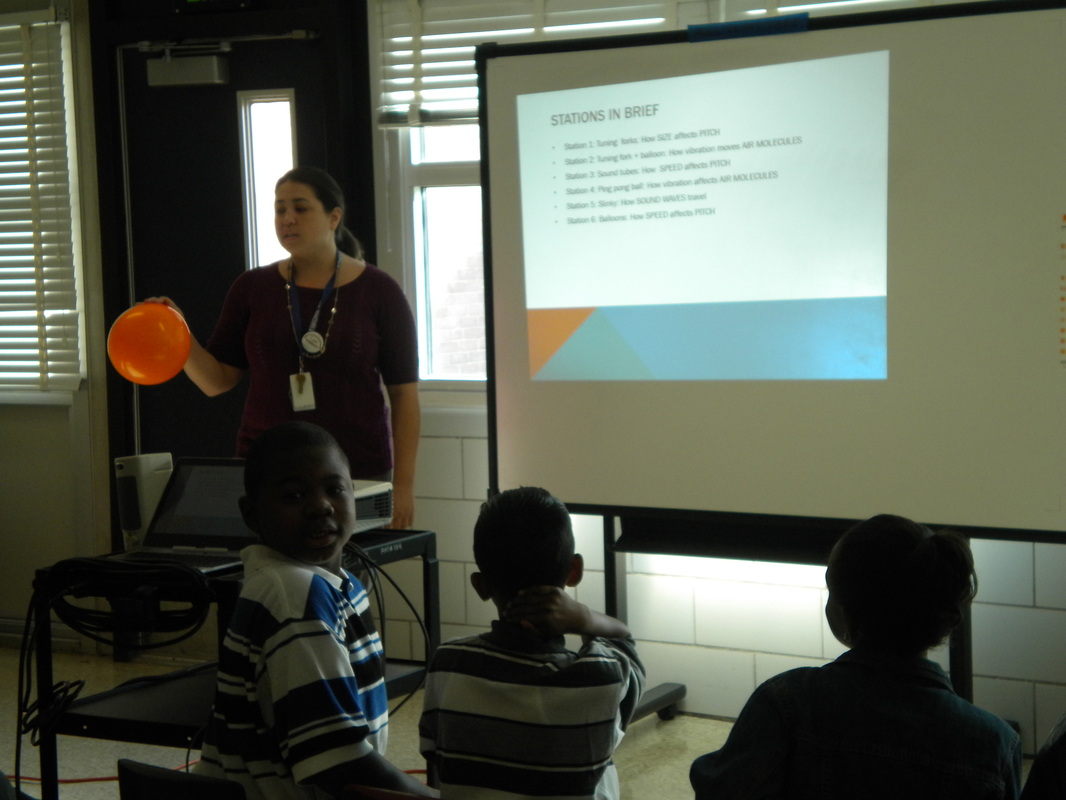
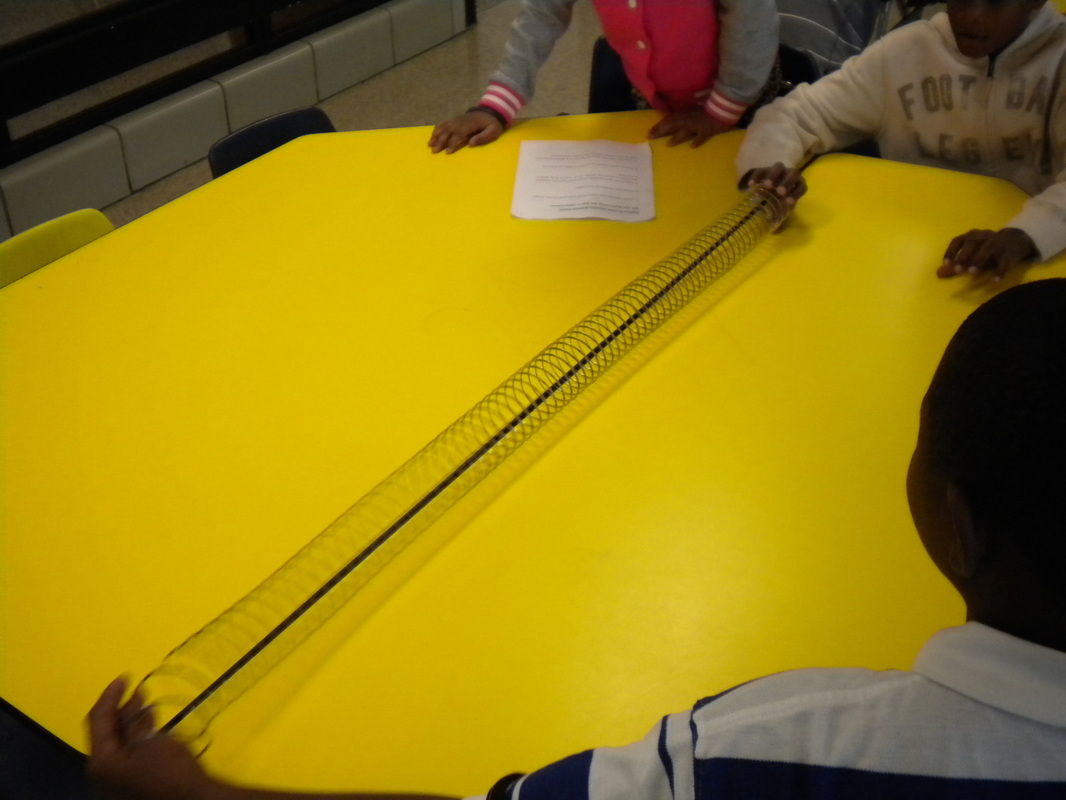
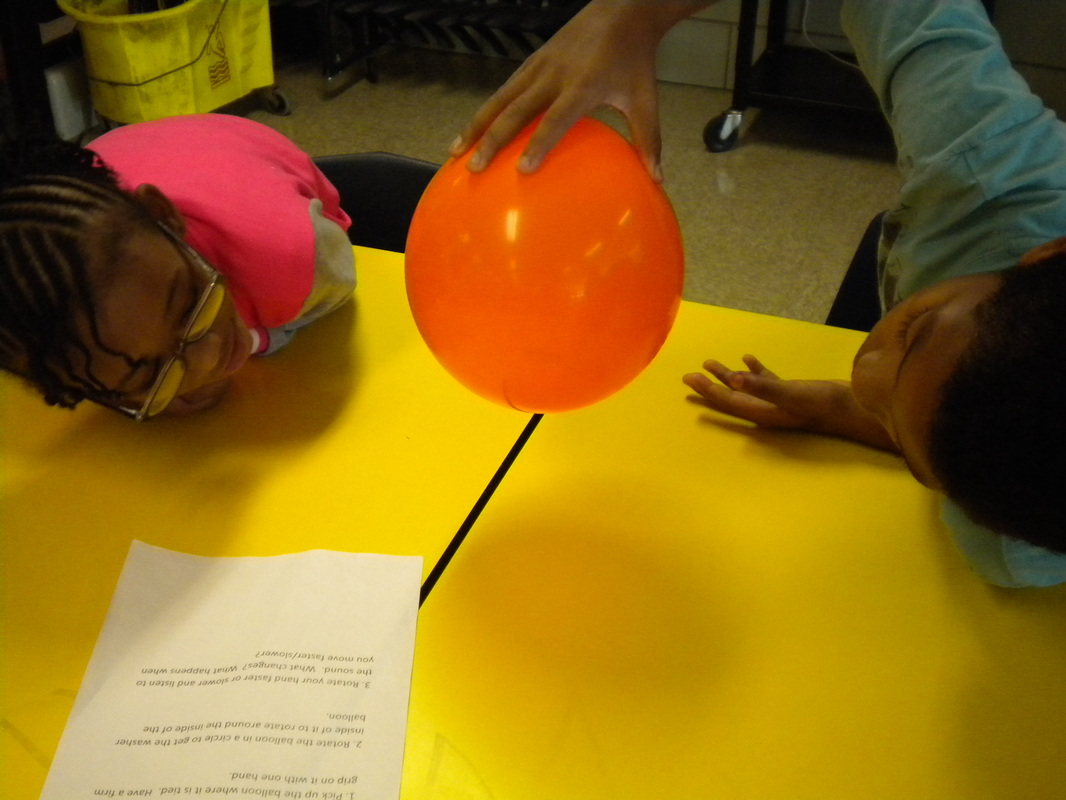
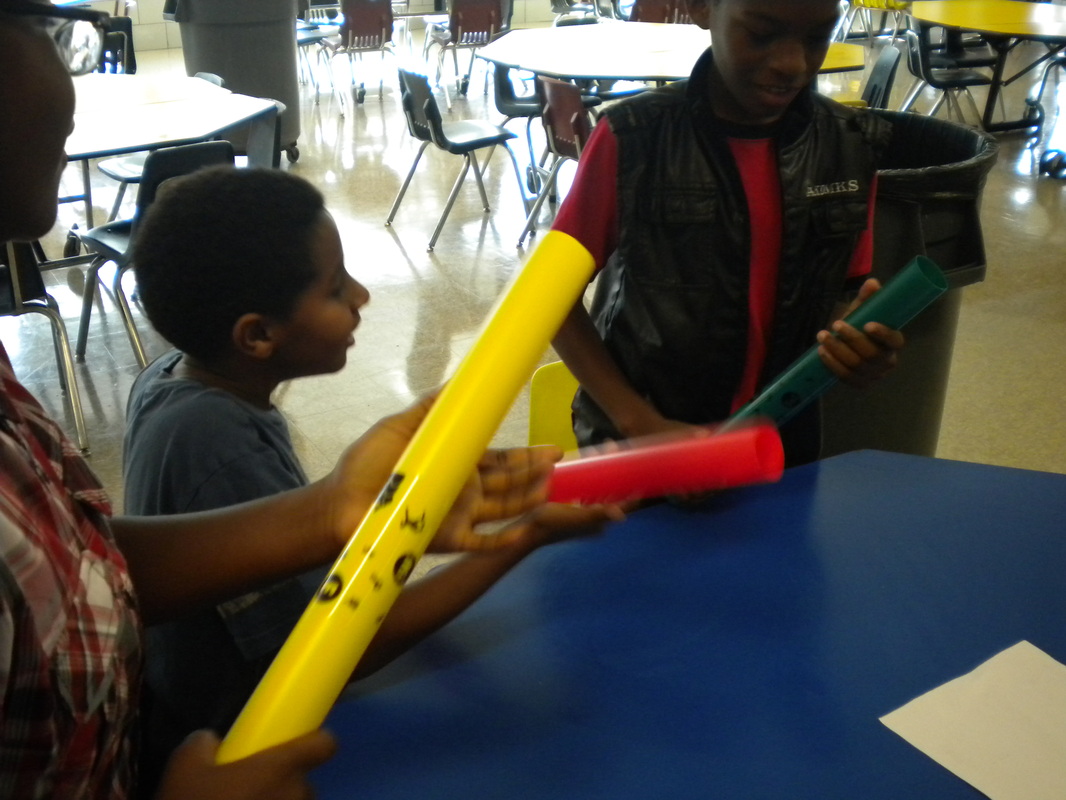
In my 4th grade Exploratory Music class, students are working at various music centers to explore different properties of sound.  Using items such as tuning forks, ping pong balls, boomwhackers, and balloons, students conduct science experiments at each station in order to learn about how vibration creates sound and how sound travels through the air. 
Because instrumental music pedagogy is often focused on whole group instruction and modeling, it can be difficult to find places to insert student-directed learning.  Imagine trying to have a student teach themselves to play a violin when they have never even held one before, or trying to prepare for a band concert without having the whole group rehearse their music together, and you can see where the problem comes in!  When I heard that Mrs. Karen Seward did a mini-sound unit with her students, I asked her for the lesson plan and knew it would be a great way to try out music centers with my 4th graders.

The centers were a huge success, and the students now have a foundation on which to understand the rest of the instruments they will be learning about this year in Exploratory Music.  I am hoping to include more centers throughout the school year to continue this high level of student engagement in my classroom.
5 Comments

    Authors

    Reflections from teachers, administrators, and students at the Lighthouse Schools.

    Categories

    All
    Administrator
    Art
    Community Engagement
    Counselor
    Digital Citizenship
    Digital Tools
    Flipped Learning
    Language Arts
    Learner Centered Environment
    Maker Learning
    Math
    Music
    Personalized Learning
    Physical Education
    Professional Development
    Project Based Learning
    Real World Connections
    Research Skills
    Science
    Small Group Instruction
    Social Studies
    Student
    Teacher
    Technology

    RSS Feed

    Archives

    June 2018
    May 2018
    April 2018
    March 2018
    February 2018
    January 2018
    December 2017
    November 2017
    October 2017
    July 2017
    June 2017
    May 2017
    April 2017
    March 2017
    February 2017
    January 2017
    December 2016
    November 2016
    October 2016
    August 2016
    June 2016
    May 2016
    April 2016
    March 2016
    February 2016
    January 2016
    December 2015
    November 2015
    October 2015
    June 2015
    May 2015
    April 2015
    March 2015
    February 2015
    January 2015
    December 2014
    November 2014
    October 2014
    September 2014
    August 2014
    July 2014
    June 2014

Team BCPS Logo

© 2015 Baltimore County Public Schools. All rights reserved. 

Proudly powered by Weebly