
|
|
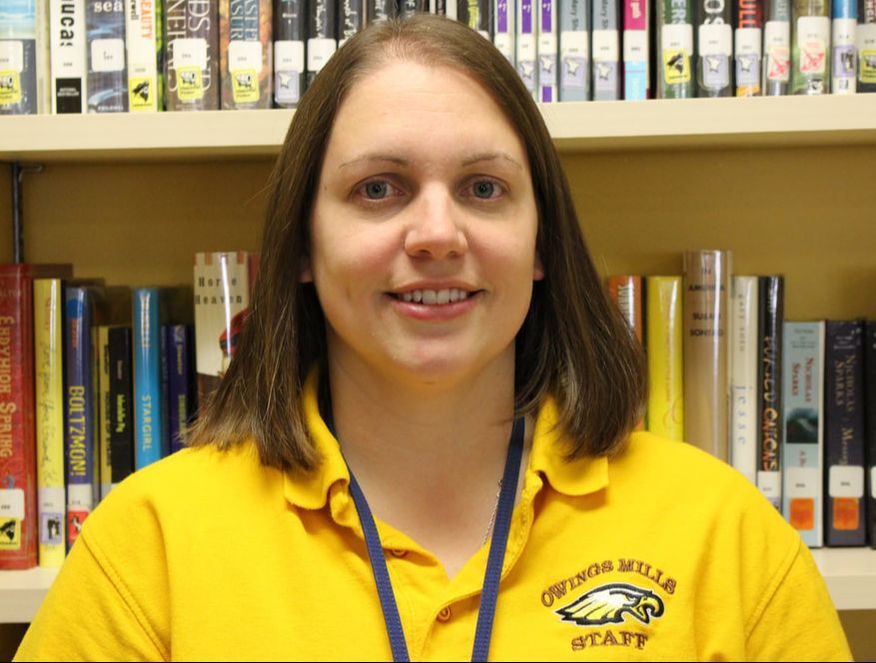
Sarah Hohlfeld - Teacher, Owings Mills High School
|
Sarah Hohlfeld has been teaching high school English in Baltimore County for 13 years. She graduated from Duquesne University (Pittsburgh) with a degree in Secondary Education and earned her Master's as a Reading Specialist from Goucher College. She currently teaches English 9 (Standard, Honors, and Gifted & Talented) and AVID 10. She is her school's AVID Site Coordinator and co-advisor of the National Honor Society. In her free time, she enjoys spending time with her husband and two young sons and reading all sorts of books.
|
April 2018
Being a Lighthouse school has afforded my students numerous opportunities to guide their own research on the topics we cover in class. It used to be that there was one major research project in English classes. Teachers reserved time in the Library for book research and computer time. It was a battle to get in before testing started, and it seemed that every English teacher had the research unit at the same time. Students spent one quarter’s worth of the school year learning about reliable sources, taking notes, citing sources, and putting it together in an essay. Retention was weak. Year to year, I found myself having to re-teach these skills because students used them once and then forgot them. It was time consuming and frustrating for all of us.
Enter the Lighthouse school model.
This year, my English 9 students have investigated sources related to the Antebellum South, the Great Depression and Civil Rights Movement, and, most recently, Elizabethan England. My English 10 students have researched oppression, the Holocaust, genocide, and information related to the dictatorship of Trujillo in the Dominican Republic. We have been around the world and back in time – and not in only one quarter of the school year. As we complete the smaller research projects, we use the same skills we covered in the original research unit, but instead of a “one-and-done” model, the skills are constantly used and reinforced. We’ve worked independently and in small groups. If students are struggling with a skill, I’ve been able to use TSGI to re-teach or provide additional practices. I can provide online tutorials for students who want a quick refresher. I can push out differentiated sources for students at all comprehension levels. And the students have more opportunities to self-pace and choose what they want their final product to look like.
Let’s be real though -- research is still frustrating. There are still constant reminders that Wikipedia is not a reliable source for scholarly research (even though it’s fun to get lost in the trivia it provides), that quotation marks need to be used around direct text from a source, and that simply copying and pasting information isn’t going to help us with anything (except to maybe show that you’ve mastered the “ctrl + v” and “ctrl + c” functions). But my students have been more engaged in the process and retention of research skills is on the rise.
And when they connect what we’re studying to their research, and the proverbial light-bulb goes off above their heads?
That moment is priceless.
Being a Lighthouse school has afforded my students numerous opportunities to guide their own research on the topics we cover in class. It used to be that there was one major research project in English classes. Teachers reserved time in the Library for book research and computer time. It was a battle to get in before testing started, and it seemed that every English teacher had the research unit at the same time. Students spent one quarter’s worth of the school year learning about reliable sources, taking notes, citing sources, and putting it together in an essay. Retention was weak. Year to year, I found myself having to re-teach these skills because students used them once and then forgot them. It was time consuming and frustrating for all of us.
Enter the Lighthouse school model.
This year, my English 9 students have investigated sources related to the Antebellum South, the Great Depression and Civil Rights Movement, and, most recently, Elizabethan England. My English 10 students have researched oppression, the Holocaust, genocide, and information related to the dictatorship of Trujillo in the Dominican Republic. We have been around the world and back in time – and not in only one quarter of the school year. As we complete the smaller research projects, we use the same skills we covered in the original research unit, but instead of a “one-and-done” model, the skills are constantly used and reinforced. We’ve worked independently and in small groups. If students are struggling with a skill, I’ve been able to use TSGI to re-teach or provide additional practices. I can provide online tutorials for students who want a quick refresher. I can push out differentiated sources for students at all comprehension levels. And the students have more opportunities to self-pace and choose what they want their final product to look like.
Let’s be real though -- research is still frustrating. There are still constant reminders that Wikipedia is not a reliable source for scholarly research (even though it’s fun to get lost in the trivia it provides), that quotation marks need to be used around direct text from a source, and that simply copying and pasting information isn’t going to help us with anything (except to maybe show that you’ve mastered the “ctrl + v” and “ctrl + c” functions). But my students have been more engaged in the process and retention of research skills is on the rise.
And when they connect what we’re studying to their research, and the proverbial light-bulb goes off above their heads?
That moment is priceless.
December 2017
This summer our Teacher Leader Corp received some professional development that, while seeming obvious and simple, was really eye-opening and lesson changing. Responsive lesson planning. It seems obvious, right? We always plan our future lessons based on the responses from what we just taught. I know that I have plans sketched out, but I don’t really finalize things until closer to the day so that I can make adjustments based on the lesson we just did. But how many of us have really taken the time to think those things through BEFORE we actually teach the lessons in a unit? How many of us have really thought about these things as we’re creating unit plans? My fellow 9th grade English team teachers and I sat down with our first unit during this professional development and really thought through how our students would possibly respond to certain tasks we assigned. Where would they struggle with the PBA? Where would they be successful? How could we plan to help those who struggled, provide additional supports to those who understood but could use more practice, and provide enrichment opportunities for those who were ready to move forward? What could we do with Targeted Small Group Instruction (TSGI) at various points throughout the unit? How could we build those opportunities into our lessons before we actually got to them? It was all about anticipating their needs and creating preemptive strikes – for as many lessons as possible. Again, it seems obvious, right? We already backwards map our units when we plan, so it seems like this is something we’d automatically do. When we looked at our opening unit in this new way though, it was lesson changing. Literally. Now we knew almost exactly where we wanted to bring in TSGI. We had time now to really gather meaningful activities and materials. I’ll be honest though. This takes TIME. Time that I don’t always have to devote in order to pre-plan EVERY lesson for EVERY unit. How have I solved this problem?
I haven’t.
But I’ve started small. I focus on that PBA right now. I don’t focus on every lesson. I CAN’T focus on every lesson right now. I figure that as I plan and build every quarter, every semester, and every year, I’ll be creating more time for responsive lesson planning. I’ll have banks of materials from which to draw. We’ll all have more resources to share.
This summer our Teacher Leader Corp received some professional development that, while seeming obvious and simple, was really eye-opening and lesson changing. Responsive lesson planning. It seems obvious, right? We always plan our future lessons based on the responses from what we just taught. I know that I have plans sketched out, but I don’t really finalize things until closer to the day so that I can make adjustments based on the lesson we just did. But how many of us have really taken the time to think those things through BEFORE we actually teach the lessons in a unit? How many of us have really thought about these things as we’re creating unit plans? My fellow 9th grade English team teachers and I sat down with our first unit during this professional development and really thought through how our students would possibly respond to certain tasks we assigned. Where would they struggle with the PBA? Where would they be successful? How could we plan to help those who struggled, provide additional supports to those who understood but could use more practice, and provide enrichment opportunities for those who were ready to move forward? What could we do with Targeted Small Group Instruction (TSGI) at various points throughout the unit? How could we build those opportunities into our lessons before we actually got to them? It was all about anticipating their needs and creating preemptive strikes – for as many lessons as possible. Again, it seems obvious, right? We already backwards map our units when we plan, so it seems like this is something we’d automatically do. When we looked at our opening unit in this new way though, it was lesson changing. Literally. Now we knew almost exactly where we wanted to bring in TSGI. We had time now to really gather meaningful activities and materials. I’ll be honest though. This takes TIME. Time that I don’t always have to devote in order to pre-plan EVERY lesson for EVERY unit. How have I solved this problem?
I haven’t.
But I’ve started small. I focus on that PBA right now. I don’t focus on every lesson. I CAN’T focus on every lesson right now. I figure that as I plan and build every quarter, every semester, and every year, I’ll be creating more time for responsive lesson planning. I’ll have banks of materials from which to draw. We’ll all have more resources to share.

© 2015 Baltimore County Public Schools. All rights reserved.