
|
|
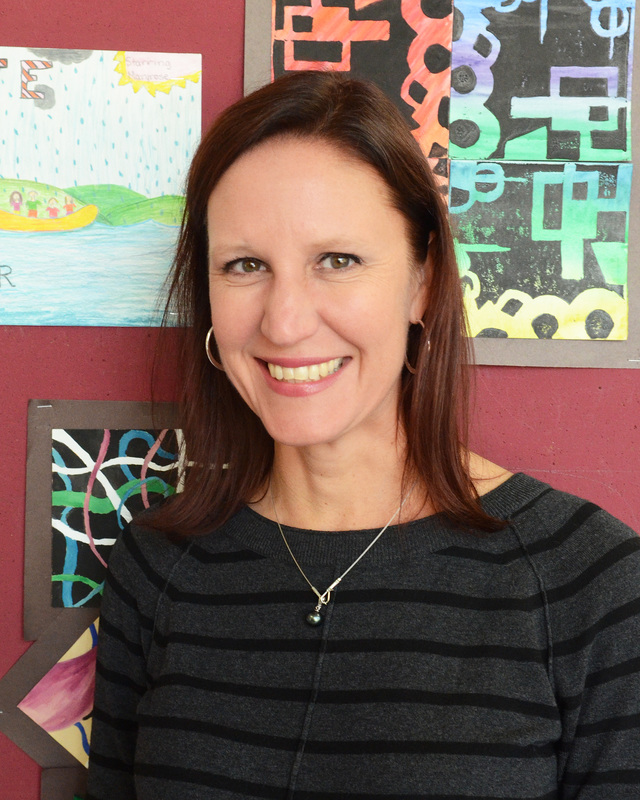
Christine Roberts - S.T.A.T. Teacher, Dumbarton Middle
|
In her third year as the S.T.A.T teacher at Dumbarton Middle School, Christine Roberts could not be more excited to be a part of the instructional transformation involved in becoming a lighthouse school. A former secondary science teacher in Baltimore and Prince George's County Schools, Christine has embraced the opportunity to grow as a leader and learner in her new position. She lives in Towson with her husband and three daughters and thrives on traveling and learning new things whenever possible.
|
May 2016
Be Our Guest!
Dumbarton has been a busy place since February, hosting a number of wonderful visits. While the idea of having a steady stream of guests may have seemed unnerving at first, the experience proved to be an invigorating and tremendous opportunity for learning for all involved. To share this story, I find myself going back to my three favorite questions- Why? How? and What?
Why are visits important?
Part of the lighthouse adventure involves opening our doors so others can experience the transformation of teaching and learning as the journey progresses. This component is important for a number of reasons.
Be Our Guest!
Dumbarton has been a busy place since February, hosting a number of wonderful visits. While the idea of having a steady stream of guests may have seemed unnerving at first, the experience proved to be an invigorating and tremendous opportunity for learning for all involved. To share this story, I find myself going back to my three favorite questions- Why? How? and What?
Why are visits important?
Part of the lighthouse adventure involves opening our doors so others can experience the transformation of teaching and learning as the journey progresses. This component is important for a number of reasons.
- It is a great way to showcase teaching and learning.
- It provides an opportunity for teachers to receive meaningful feedback to support growth and celebrate progress.
- It allows visitors to learn, ask questions, and share new ideas and methods when they return to their schools.
- It creates a time and space for teachers from different schools to network and collaborate.
- It reinforces that the transformation is a process and that growth can be observed. A visit in May looks different that a visit in March, which looks different than a visit in December.
How can visitors get the most out of their trip?
At Dumbarton we put a few procedures in place to maximize our guests’ experience. If visiting teachers were going take the time to secure a substitute, create sub plans, and travel to get here, we wanted to make sure they had many opportunities to learn. Here are a few actions we took to try to guarantee a positive and worthwhile visit:
At Dumbarton we put a few procedures in place to maximize our guests’ experience. If visiting teachers were going take the time to secure a substitute, create sub plans, and travel to get here, we wanted to make sure they had many opportunities to learn. Here are a few actions we took to try to guarantee a positive and worthwhile visit:
- Teachers were informed of all visits in advance and encouraged to showcase a responsive or learner-centered teaching method. It was not meant to be a “dog-and-pony show,’ but rather a purposeful learning experience that allowed DMS teachers to demonstrate their progress, which in turn made sure that our guests left with meaningful take-aways.
- Teachers were encouraged to complete a quick survey to record their name, room number and a “lesson in a nutshell” summary of what visitors could expect to see. This information was compiled into a document called “Personalizing your Visit to DMS,” which was distributed to all guests so they could plan their visit to meet their learning wants and needs.
- Multiple opportunities were planned for guests to talk to our teachers. We began each visit with a warm welcome and overview with our principal and ended with Q and A and debrief. DMS teachers joined in on these discussions during planning periods and were a fantastic resource for our visitors. During one visit we also offered a “speed dating” strategy in which visitors joined a grade level meeting to share and ask questions of each other about learner-centered practices.
What was the result?
It was a whirlwind! It was a bit exhausting! It was empowering! It was GREAT! I couldn’t be more proud to be involved in this work and to spend my days with such amazing and hard-working teachers! Below is a small sampling of feedback written for our teachers during numerous visits from BCPS middle and high schools that speak volumes about our journey.
It was a whirlwind! It was a bit exhausting! It was empowering! It was GREAT! I couldn’t be more proud to be involved in this work and to spend my days with such amazing and hard-working teachers! Below is a small sampling of feedback written for our teachers during numerous visits from BCPS middle and high schools that speak volumes about our journey.
- “Teacher helping a small group clarify learning based on student self-assessment, others working on a different task independently”
- “Customized lesson included formative assessment and strategic regrouping to remediate students’ comprehension”
- “Student choice in product and content, students engaged in the assignment”
- “Creative lesson, students were working together and supporting one another. It takes a confident teacher to step off the stage and give the students power over their learning”
- “Loved the use of Plickers to pull a group who needed to clarify misconceptions of foundational understanding”
- “Thank you for explaining how to individualize tiles in BCPS One!”
- ‘Devices used to see images to support their writing task, small groups met to meet the needs of diverse learners”
- “You are doing just what we want to see! Thank you for taking risks and impacting student learning for the good.”
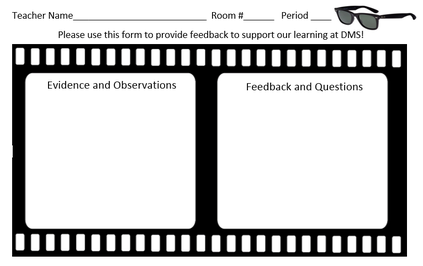
Be sure to stop by if you are in the neighborhood!
January 2016
Becoming a Learning School
“The most valuable resource that all teachers have is each other. Without collaboration our growth is limited to our own perspectives.” Robert John Meehan, educator and poet
I read this quote on a Twitter post recently. It seems to encapsulate my experience as a STAT teacher in a Lighthouse Middle School. As my S.T.A.T. journey continues, I am struck with the observation that my school has been growing into a learning school. It has been transforming into a place where the staff and students actively learn on their own and together, as well as a place where others can come to learn and help us grow by providing meaningful feedback. It is purposeful. It is challenging. It is necessary. It. Is. Exciting!
As 2015 ended and the New Year began, a number of colleagues and I could sense a palpable energy and momentum growing in our school. What is the cause? I feel it isn’t an isolated event, but rather the coming together of a number of efforts and experiences. Great value has been placed on developing a growth mindset culture, creating time and space for collaborative planning and professional learning, and encouraging open doors to share and observe instructional methods that focus on customized student learning. How has this translated in practice? Reflecting on the time I have been at DMS, I offer a tiny glimpse into our instructional evolution over the past 2 and a half years:
Growth Mindset Culture:
Mindsets in the Classroom books purchased for all DMS teachers -> teachers engage in a school-based blended 1 credit course or read the book on their own -> teacher leaders create a Growth Mindset Committee to foster a culture of growth by infusing quarterly school-wide initiatives, parent outreach, and celebration of progress in our school -> school administrators support job-embedded, county-level, and other professional learning opportunities for teachers, encourage innovative learning, and engage in professional learning alongside teachers.
Time and Space for Collaborative Planning and Professional Learning:
Master schedule is designed to allow for collaborative planning time for teachers, weekly grade level meetings, and weekly core leadership meetings in addition to monthly leadership meetings -> admin supports job-embedded PD and school-based PD for credit offered by STAT teacher -> faculty meetings are reevaluated to allow for more personalized learning -> creative solutions are used to allow for more collaborative planning time and sharing -> conversation continues to increase opportunities for collaboration.
Encouraging Open Doors to Share and Observe Instructional Methods That Focus on Customized Student Learning:
Book studies, courses and professional learning opportunities offered on Student Engagement, Grading, Digital resources, Formative assessment (including FAME), and Targeted Small Group Instruction -> Expectation for Learning walks with descriptive feedback -> Expectation for informal visits by leadership team with descriptive feedback -> scheduled and increasingly frequent outside visitors to support growth and progress -> Teachers commit to plan and implement student centered lessons, particularly on visitation days, to capitalize on the opportunity for feedback -> celebrate progress.
So what does it really look like when all of this comes together? I would like to offer one specific example of how all three of these components are in play currently at my school. Incorporating Targeted Small Group Instruction is a goal for all educators in BCPS to purposefully meet the individual needs of our learners. For most, this is an instructional change, both in the way that we as teachers were taught and how we have taught our students. Teachers must embrace a growth mindset to look at planning and instruction differently. To support this growth, I have taken advantage of the structures in place to provide a variety of opportunities for teachers to engage in professional learning, plan collaboratively and build capacity to implement responsive lessons rooted in formative assessment. In the last few weeks, these options have included job-embedded sessions during planning periods, trainings for entire departments, and customized breakout sessions during faculty meeting time. During these meetings, teachers have had time to gain knowledge and plan collaboratively so that they leave with ideas for upcoming lessons. Many teachers began planning for and infusing small group structures the next day, both celebrating and adjusting depending on the experience. Numerous teachers are inviting each other in for learning walks as a follow-up, realizing the necessity to put themselves out there when colleagues visit, if meaningful learning is to occur for everyone involved.
The result? A learning school in the making.
The snow prevented our first visit from another Lighthouse Middle School from occurring, but another date is already on the calendar. We are growing. We are ready to share our progress. We are open to feedback. We are reflective. We know we are not done. We are learners.
Becoming a Learning School
“The most valuable resource that all teachers have is each other. Without collaboration our growth is limited to our own perspectives.” Robert John Meehan, educator and poet
I read this quote on a Twitter post recently. It seems to encapsulate my experience as a STAT teacher in a Lighthouse Middle School. As my S.T.A.T. journey continues, I am struck with the observation that my school has been growing into a learning school. It has been transforming into a place where the staff and students actively learn on their own and together, as well as a place where others can come to learn and help us grow by providing meaningful feedback. It is purposeful. It is challenging. It is necessary. It. Is. Exciting!
As 2015 ended and the New Year began, a number of colleagues and I could sense a palpable energy and momentum growing in our school. What is the cause? I feel it isn’t an isolated event, but rather the coming together of a number of efforts and experiences. Great value has been placed on developing a growth mindset culture, creating time and space for collaborative planning and professional learning, and encouraging open doors to share and observe instructional methods that focus on customized student learning. How has this translated in practice? Reflecting on the time I have been at DMS, I offer a tiny glimpse into our instructional evolution over the past 2 and a half years:
Growth Mindset Culture:
Mindsets in the Classroom books purchased for all DMS teachers -> teachers engage in a school-based blended 1 credit course or read the book on their own -> teacher leaders create a Growth Mindset Committee to foster a culture of growth by infusing quarterly school-wide initiatives, parent outreach, and celebration of progress in our school -> school administrators support job-embedded, county-level, and other professional learning opportunities for teachers, encourage innovative learning, and engage in professional learning alongside teachers.
Time and Space for Collaborative Planning and Professional Learning:
Master schedule is designed to allow for collaborative planning time for teachers, weekly grade level meetings, and weekly core leadership meetings in addition to monthly leadership meetings -> admin supports job-embedded PD and school-based PD for credit offered by STAT teacher -> faculty meetings are reevaluated to allow for more personalized learning -> creative solutions are used to allow for more collaborative planning time and sharing -> conversation continues to increase opportunities for collaboration.
Encouraging Open Doors to Share and Observe Instructional Methods That Focus on Customized Student Learning:
Book studies, courses and professional learning opportunities offered on Student Engagement, Grading, Digital resources, Formative assessment (including FAME), and Targeted Small Group Instruction -> Expectation for Learning walks with descriptive feedback -> Expectation for informal visits by leadership team with descriptive feedback -> scheduled and increasingly frequent outside visitors to support growth and progress -> Teachers commit to plan and implement student centered lessons, particularly on visitation days, to capitalize on the opportunity for feedback -> celebrate progress.
So what does it really look like when all of this comes together? I would like to offer one specific example of how all three of these components are in play currently at my school. Incorporating Targeted Small Group Instruction is a goal for all educators in BCPS to purposefully meet the individual needs of our learners. For most, this is an instructional change, both in the way that we as teachers were taught and how we have taught our students. Teachers must embrace a growth mindset to look at planning and instruction differently. To support this growth, I have taken advantage of the structures in place to provide a variety of opportunities for teachers to engage in professional learning, plan collaboratively and build capacity to implement responsive lessons rooted in formative assessment. In the last few weeks, these options have included job-embedded sessions during planning periods, trainings for entire departments, and customized breakout sessions during faculty meeting time. During these meetings, teachers have had time to gain knowledge and plan collaboratively so that they leave with ideas for upcoming lessons. Many teachers began planning for and infusing small group structures the next day, both celebrating and adjusting depending on the experience. Numerous teachers are inviting each other in for learning walks as a follow-up, realizing the necessity to put themselves out there when colleagues visit, if meaningful learning is to occur for everyone involved.
The result? A learning school in the making.
The snow prevented our first visit from another Lighthouse Middle School from occurring, but another date is already on the calendar. We are growing. We are ready to share our progress. We are open to feedback. We are reflective. We know we are not done. We are learners.
October 2015
For me, as a S.T.A.T. teacher, the Lighthouse journey can be documented in a series of questions, challenges, breakthroughs, and next steps. It is a personal journey that is not in isolation, as it involves almost 100 teachers and staff, more than 1,100 students and their families, and the district leaders that support me. This journey looks, sounds, and feels different for each individual. I have tried to capture my experiences so far in the following words.
Three Big Questions
“What?” “Why?” “How?” Beyond the research, professional learning, and discussions prior to and during implementation, the answer to these questions has begun to show itself in a variety of ways. I see it in the teacher arriving at my door, gushing about how she modified her approach and has never seen her students more engaged in a particular lesson. Then in another teacher, a few minutes later, who pulls up a chair to share his two days of failure, and then a third day of success, as he tries new instructional strategies. It is in the student who can tell me which “I Can” statement she is working on, about the choice she has in the learning process, and in the product she creates to show her learning. It is also in the teacher I meet in the hallway, whose transformation has begun internally, still questioning this journey, but open to talk more and think deeply. It is heard in the video a teacher sends me of a student group performing a song they wrote about student-centered learning, after the teacher invited them into this conversation about the transformation. It is seen in the students I meet in the hallways, sprawled out and brainstorming ways to improve their airplane design or sitting in a circle to read and analyze Shakespeare together. I see the answer in the ESOL students who cheer or uncover what they don’t know as they play Quizizz, unaware that they are being formatively assessed. It is in the teachers who come together at team meetings to talk about ways to better use and manage the devices, comfortable to share their struggles with this new tool that can be both transformative and frustrating. I read it in the emails from teachers inviting me into classrooms to see them implement small group instruction or philosophical chairs debates, or asking me what I think about an idea they have for grading or not grading certain assignments. I hear answers in the low grumble of desks moving, signifying that a different room arrangement would better support student learning, and in students engaging in a student centered strategy that teachers saw in the weekly newsletter and decided to give it a try. I see it in the teacher leaders who are emerging, finding a confident voice as they navigate their own journeys and in the students who contribute to the “On a Roll” display to provide feedback about teacher efforts to better engage them in learning.
More personally, I am uncovering answers to the three big questions in the people I work with each day and that support me outside my school building. Never in my twenty-one years in education have I been more invigorated and often exhausted, more inspired and sometimes defeated, more confident and then more humbled, more engaged in amazing professional learning and then overwhelmed with the task. I am learning that the transformation is all of these things and that success depends on people I am engaged with along the way. They inspire me and challenge me and make me want to be better.
I took a long time to write my first reflection; I think preparing for this post became a journey in itself. I thought deeply about what my message might be and how I could accurately highlight the best moments, biggest roadblocks, and tiny transformations that together comprise my lighthouse journey. Although I don’t think it is possible to capture this amazing adventure in words, I gave it a shot and will leave you with perhaps the best and perhaps somewhat frustrating advice I have received thus far: “You need to slow down to move fast.” Stay tuned next month for a reflection about our school-wide and lighthouse middle school learning walks!
For me, as a S.T.A.T. teacher, the Lighthouse journey can be documented in a series of questions, challenges, breakthroughs, and next steps. It is a personal journey that is not in isolation, as it involves almost 100 teachers and staff, more than 1,100 students and their families, and the district leaders that support me. This journey looks, sounds, and feels different for each individual. I have tried to capture my experiences so far in the following words.
Three Big Questions
“What?” “Why?” “How?” Beyond the research, professional learning, and discussions prior to and during implementation, the answer to these questions has begun to show itself in a variety of ways. I see it in the teacher arriving at my door, gushing about how she modified her approach and has never seen her students more engaged in a particular lesson. Then in another teacher, a few minutes later, who pulls up a chair to share his two days of failure, and then a third day of success, as he tries new instructional strategies. It is in the student who can tell me which “I Can” statement she is working on, about the choice she has in the learning process, and in the product she creates to show her learning. It is also in the teacher I meet in the hallway, whose transformation has begun internally, still questioning this journey, but open to talk more and think deeply. It is heard in the video a teacher sends me of a student group performing a song they wrote about student-centered learning, after the teacher invited them into this conversation about the transformation. It is seen in the students I meet in the hallways, sprawled out and brainstorming ways to improve their airplane design or sitting in a circle to read and analyze Shakespeare together. I see the answer in the ESOL students who cheer or uncover what they don’t know as they play Quizizz, unaware that they are being formatively assessed. It is in the teachers who come together at team meetings to talk about ways to better use and manage the devices, comfortable to share their struggles with this new tool that can be both transformative and frustrating. I read it in the emails from teachers inviting me into classrooms to see them implement small group instruction or philosophical chairs debates, or asking me what I think about an idea they have for grading or not grading certain assignments. I hear answers in the low grumble of desks moving, signifying that a different room arrangement would better support student learning, and in students engaging in a student centered strategy that teachers saw in the weekly newsletter and decided to give it a try. I see it in the teacher leaders who are emerging, finding a confident voice as they navigate their own journeys and in the students who contribute to the “On a Roll” display to provide feedback about teacher efforts to better engage them in learning.
More personally, I am uncovering answers to the three big questions in the people I work with each day and that support me outside my school building. Never in my twenty-one years in education have I been more invigorated and often exhausted, more inspired and sometimes defeated, more confident and then more humbled, more engaged in amazing professional learning and then overwhelmed with the task. I am learning that the transformation is all of these things and that success depends on people I am engaged with along the way. They inspire me and challenge me and make me want to be better.
I took a long time to write my first reflection; I think preparing for this post became a journey in itself. I thought deeply about what my message might be and how I could accurately highlight the best moments, biggest roadblocks, and tiny transformations that together comprise my lighthouse journey. Although I don’t think it is possible to capture this amazing adventure in words, I gave it a shot and will leave you with perhaps the best and perhaps somewhat frustrating advice I have received thus far: “You need to slow down to move fast.” Stay tuned next month for a reflection about our school-wide and lighthouse middle school learning walks!

© 2015 Baltimore County Public Schools. All rights reserved.